

Can Voith Fluid Coupling be used in reverse operation?
Sep 14, 2026
As a supplier of Voith Fluid Couplings, I've encountered numerous inquiries from customers regarding the possibility of using these couplings in reverse operation. This question not only reflects the users' innovative thinking about equipment application scenarios but also emphasizes the need for a comprehensive understanding of fluid coupling technology. In this blog, we will dive deep into the scientific analysis of whether Voith Fluid Couplings can be used in reverse operation, exploring the principles, advantages, limitations, and practical applications.
Understanding the Basics of Fluid Couplings
Before discussing reverse operation, let's first understand the fundamental working principle of a Fluid Coupling. A fluid coupling is a hydrodynamic device that transfers power from a prime - mover (usually an electric motor) to a load through a fluid medium, typically oil. It consists of two main components: the impeller (connected to the input shaft) and the turbine (connected to the output shaft), both enclosed in a housing filled with fluid.

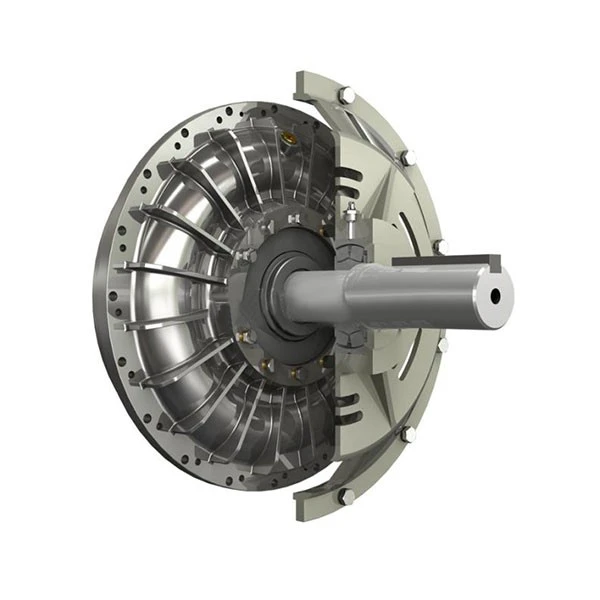
When the impeller rotates, it imparts kinetic energy to the fluid. The fluid then transfers this energy to the turbine, causing it to rotate and drive the load. The key advantage of a fluid coupling is its ability to provide smooth start - up, protect the drive system from shock loads, and allow for some degree of slip between the input and output shafts.
Voith Fluid Couplings: A Closer Look
Voith is a well - known brand in the field of fluid coupling technology. Their YOX Fluid Coupling series, for example, is designed with high - precision engineering to ensure efficient power transmission and long - term reliability. These couplings are widely used in various industries, such as mining, power generation, and material handling.
Voith fluid couplings are optimized for forward operation, where the impeller rotates in the designed direction to drive the turbine. The internal flow channels, the shape of the impeller and turbine blades, and the overall design of the coupling are all engineered to maximize performance in the forward direction.
Can Voith Fluid Couplings be Used in Reverse Operation?
Theoretical Analysis
In theory, a fluid coupling can operate in reverse. The basic principle of power transfer through a fluid medium remains the same regardless of the rotation direction. When the turbine is forced to rotate as the driving component, it can impart energy to the fluid, which in turn can transfer this energy to the impeller. However, several factors need to be considered.
- Efficiency: The efficiency of a fluid coupling is highly dependent on the design of the impeller and turbine blades. These blades are usually designed to work optimally in the forward direction. In reverse operation, the fluid flow pattern within the coupling changes, which may lead to increased turbulence and energy losses. As a result, the efficiency of the coupling will likely decrease compared to forward operation.
- Internal Forces: The internal structure of a Voith fluid coupling is designed to withstand specific forces during forward operation. In reverse operation, the direction of the forces acting on the components, such as the bearings and seals, will change. This may cause premature wear and tear on these parts, reducing the overall lifespan of the coupling.
- Heat Generation: Due to the reduced efficiency and increased turbulence in reverse operation, more heat will be generated within the coupling. If the heat dissipation system of the coupling is not designed to handle this additional heat, it may lead to overheating and potential damage to the coupling.
Practical Applications
Despite the above - mentioned challenges, there are some practical scenarios where reverse operation of a Voith fluid coupling may be considered.
- Emergency Situations: In some industrial processes, an emergency situation may require the load to be driven in the opposite direction. For example, in a conveyor system, if there is a blockage, reversing the conveyor may be necessary to clear the blockage. In such cases, a Voith fluid coupling can be used in reverse operation for a short period, provided that proper precautions are taken.
- Specialized Applications: There are some specialized applications where reverse operation is a normal part of the process. For example, in some reversible pumps or winches, the ability to operate the fluid coupling in reverse may be beneficial. However, in these cases, the user needs to consult with Voith or a qualified engineer to ensure that the coupling can be properly adapted for reverse operation.
Precautions for Reverse Operation
If you decide to use a Voith fluid coupling in reverse operation, the following precautions should be taken:
- Consult the Manufacturer: Before attempting reverse operation, contact Voith or your local supplier. They can provide you with detailed technical information and guidance based on the specific model of the fluid coupling you are using.
- Inspect and Maintain the Coupling: Thoroughly inspect the coupling for any signs of wear or damage before reverse operation. Regular maintenance, including changing the fluid and checking the seals and bearings, is even more critical when the coupling is operating in reverse.
- Monitor the Operation: Continuously monitor the temperature, vibration, and performance of the coupling during reverse operation. If any abnormal conditions are detected, stop the operation immediately and investigate the cause.
Conclusion
In summary, while it is theoretically possible to use a Voith Fluid Coupling in reverse operation, there are significant challenges and limitations that need to be addressed. The efficiency, internal forces, and heat generation are key factors that can affect the performance and lifespan of the coupling. However, in certain emergency or specialized applications, reverse operation may be feasible with proper precautions.
If you are considering using a Voith Fluid Coupling in reverse operation or have any other questions about fluid coupling applications, please feel free to contact us. Our team of experts is ready to provide you with professional advice and support to ensure the optimal performance of your equipment.
References
- Voith Fluid Coupling Technical Manuals
- Hydrodynamic Transmission Theory and Applications, various academic papers