

What is the relationship between the fill level of Flender Fluid Coupling and its performance?
Aug 30, 2026
As a supplier of Flender Fluid Couplings, I've had the privilege of witnessing firsthand the intricacies of these remarkable devices. One of the most critical aspects that significantly impacts the performance of a Flender Fluid Coupling is its fill level. In this blog, I'll delve into the relationship between the fill level of a Flender Fluid Coupling and its performance, exploring how different fill levels can affect various aspects of the coupling's operation.
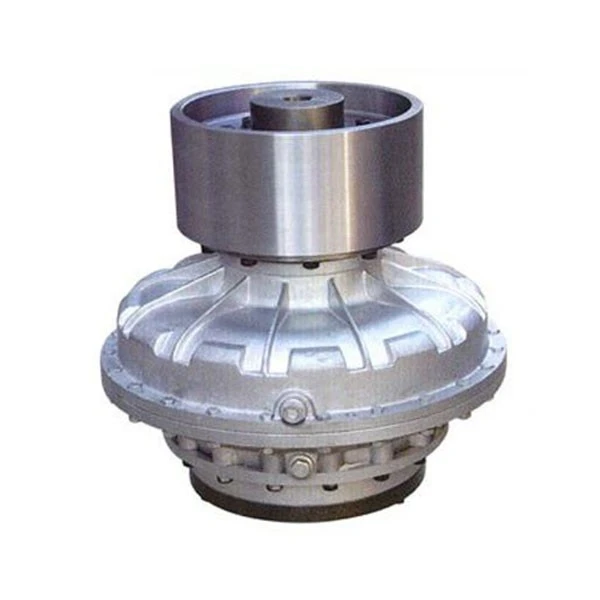

Understanding Flender Fluid Couplings
Before we discuss the fill level, let's briefly understand what a Flender Fluid Coupling is. A fluid coupling is a hydrodynamic device that transmits power from a prime mover, such as an electric motor, to a driven machine, like a pump or a conveyor. It uses a fluid, typically oil, to transfer torque through the coupling. The main components of a fluid coupling include an impeller (connected to the input shaft) and a runner (connected to the output shaft), both enclosed in a housing filled with fluid.
The Role of Fill Level
The fill level of a Flender Fluid Coupling refers to the amount of fluid present inside the coupling. It plays a crucial role in determining the coupling's performance characteristics, including torque transmission, efficiency, and speed control. The fill level can be adjusted to meet the specific requirements of different applications.
Torque Transmission
One of the primary functions of a fluid coupling is to transmit torque from the input shaft to the output shaft. The fill level directly affects the torque transmission capacity of the coupling. When the fill level is increased, more fluid is available to transfer the torque, resulting in a higher torque transmission capacity. Conversely, a lower fill level reduces the amount of fluid available for torque transfer, leading to a decrease in the coupling's torque transmission capacity.
For example, in applications where high torque is required, such as heavy-duty conveyors or crushers, a higher fill level may be necessary to ensure efficient power transmission. On the other hand, in applications where precise speed control is needed, a lower fill level can be used to reduce the torque and allow for smoother operation.
Efficiency
The fill level also has a significant impact on the efficiency of the Flender Fluid Coupling. Efficiency is defined as the ratio of the output power to the input power. A properly filled coupling operates more efficiently because it can transfer power more effectively. When the fill level is too low, the coupling may experience slip, which results in energy loss and reduced efficiency. Slip occurs when the speed of the output shaft is lower than the speed of the input shaft due to insufficient fluid to transfer the torque.
Conversely, an overfilled coupling can also lead to inefficiencies. Excess fluid can cause churning losses, where the fluid is agitated within the coupling, resulting in additional energy consumption. Therefore, it is essential to maintain the optimal fill level to ensure maximum efficiency.
Speed Control
Another important aspect of a Flender Fluid Coupling is its ability to control the speed of the driven machine. By adjusting the fill level, the coupling can be used to vary the speed of the output shaft relative to the input shaft. A lower fill level allows for a greater degree of slip, which can be used to reduce the speed of the driven machine. This is particularly useful in applications where variable speed operation is required, such as in fans or pumps.
For instance, in a fan application, the fill level can be adjusted to control the fan speed, thereby regulating the airflow. By reducing the fill level, the coupling can introduce slip, which reduces the speed of the fan. This not only allows for energy savings but also provides better control over the process.
Determining the Optimal Fill Level
Determining the optimal fill level for a Flender Fluid Coupling depends on several factors, including the application requirements, the type of driven machine, and the operating conditions. The manufacturer's guidelines and specifications should always be followed when filling the coupling. In general, the fill level should be set to ensure that the coupling operates within its designed torque and speed range.
It is also important to note that the fill level may need to be adjusted over time due to factors such as fluid leakage or changes in operating conditions. Regular maintenance and monitoring of the fill level are essential to ensure the continued performance and reliability of the coupling.
Comparison with Other Fluid Couplings
When considering fluid couplings, it's worth comparing Flender Fluid Couplings with other brands, such as the Voith Fluid Coupling. While both types of couplings operate on the same hydrodynamic principle, there may be differences in their design, performance, and application suitability.
Flender Fluid Couplings are known for their high-quality construction, reliability, and versatility. They are designed to meet a wide range of industrial applications, from light-duty to heavy-duty. The ability to adjust the fill level provides flexibility in optimizing the coupling's performance for specific requirements.
On the other hand, Voith Fluid Couplings are also well-regarded in the industry and offer their own unique features and benefits. The choice between the two will depend on the specific needs of the application, including factors such as torque requirements, speed control, and cost.
Importance of Choosing the Right Supplier
As a supplier of Flender Fluid Couplings, I understand the importance of providing high-quality products and excellent customer service. When choosing a supplier, it's essential to consider factors such as product quality, technical support, and after-sales service.
A reliable supplier will not only provide you with the right coupling for your application but also offer guidance on installation, maintenance, and troubleshooting. They should have a deep understanding of the product and be able to answer any questions you may have.
Conclusion
In conclusion, the fill level of a Flender Fluid Coupling is a critical factor that significantly affects its performance. By understanding the relationship between the fill level and the coupling's torque transmission, efficiency, and speed control, you can optimize the coupling's operation for your specific application.
Whether you're looking to improve the performance of your existing equipment or install a new fluid coupling, it's important to work with a trusted supplier who can provide you with the right product and support. If you have any questions or are interested in learning more about Flender Fluid Couplings, please don't hesitate to contact us. We're here to help you find the best solution for your needs.
References
- Manufacturer's documentation for Flender Fluid Couplings
- Industry standards and guidelines for fluid couplings
- Technical articles and research papers on fluid coupling performance